How to Compare Rummy Hands With the Same Number of Cards
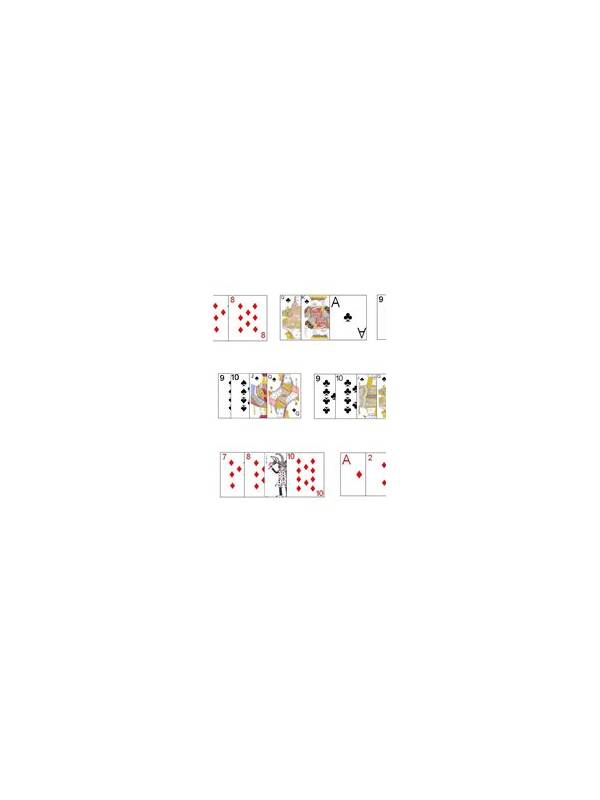
Two rummy hands can contain the same number of cards and still have very different value for decision-making. Card count alone says little about how close groups are to completion, how many routes overlap, or how expensive a mistake would be. A structured comparison makes review more useful.
Start by counting committed cards. These are cards already placed in a valid group under the variant’s rules. Then count candidates: cards that connect to a group with one realistic addition or that can serve more than one route. Everything else is an isolated card. This three-part inventory is more informative than saying the hand looks good or bad.
Next, compare route width. A narrow route depends on one particular rank or suit. A wider route can be completed in several ways, although wider does not always mean better. Several weak possibilities can create confusion. Ask which route has both useful flexibility and a clear discard plan.
Consider penalty exposure as well. A hand with many high-value isolated cards may be more urgent than a hand with fewer candidates but low-cost leftovers. Your goal depends on the scoring system, so verify how ungrouped cards are counted before applying this comparison. Do not import a point assumption from another format.
A final comparison is information quality. Did the hand become clearer after the last draw, or did it merely become larger? A card that creates a visible sequence is often easier to evaluate than a card that supports several vague hopes. Mark whether your evidence is strong, moderate, or speculative.
Use a small table in your journal: committed, candidate, isolated, route width, and penalty exposure. Fill it in for two hands after practice. The exercise teaches you to compare structure rather than excitement. Over time, you may notice that the strongest decision is often the hand that leaves one clear plan and a manageable discard, even when another hand contains more apparent possibilities. The comparison can also include recovery potential. If one hand is slightly weaker now but can be simplified safely, while another depends on several exact future cards, the first may offer better control. “Better” therefore needs a definition: closer to legal completion, lower penalty, clearer information, or easier review. Write that definition before comparing. This prevents you from changing the standard halfway through because one hand produced a more exciting draw. It also makes conversations with other players clearer: you can disagree about a priority while still agreeing about the hand’s visible structure.