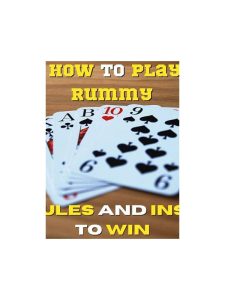
Rummy How-To: Create a Quiet Pre-Draw Checklist

A pre-draw checklist should be short enough to use without slowing the table. Its purpose is to protect the important questions when the hand becomes complicated. Use the same order each turn so the process becomes familiar rather than another decision to make.
Start with legality. Ask whether your current groups include the required pure sequence and whether any proposed arrangement depends on a joker in a way the rules do not permit. This prevents you from investing several turns in a structure that cannot support a valid declaration.
Next check improvement. What would the best available draw change? Would it complete a group, create a useful bridge, or only add another isolated possibility? You do not need to predict the exact card. You need to know which kind of improvement your hand needs most.
Then check exit cost. Which card is easiest to discard after the draw, and which card would be painful to lose? A draw is not free if it leaves you with an unmanageable extra card. Compare the new card with the weakest current card before committing to a route.
Review public evidence briefly. Note any visible discard that matters to your route, but do not let a speculative read of another player replace your own hand assessment. If the table is fast, keep this question to one fact rather than trying to reconstruct every action.
Finally name the turn’s objective: complete, repair, reduce penalty, or gather information. If no objective is clear, choose the option that preserves the most legal and flexible structure. After the discard, let the hand reset; do not keep replaying the previous choice while the next turn begins.
The checklist may feel unnecessary in easy hands. That is useful practice. A routine built during calm moments is easier to access when the table becomes demanding. Keep it quiet, repeatable, and focused on decisions you can actually control.
Do not let the checklist become a demand for perfect certainty. Some turns will remain close calls. The routine has done its job when it confirms the rules, identifies the main improvement, and makes the discard explainable. After that, act and accept that the next card is outside your control. You can shorten the checklist further for a fast table: legality, improvement, exit. The longer version belongs in practice or in a slower game. A checklist that cannot be completed comfortably will eventually be skipped, so match its size to the pace and complexity of the hand.